Part I — Understand the Product · Chapter 03
A chair crosses a border before it seats anyone. A loan crosses an entire bank before it approves anyone. Both crossings obey the same discipline of flow.
A chair on an Acapulco terrace and a loan approved on a phone seem to share nothing. One is steel, vinyl cord and sunlight; the other is an app, a risk model and a digital file. But behind both sits the same invisible apparatus: a production line — a sequence of stations, materials, hands and rules that turn an intention into something a customer can use.
Lean manufacturing, formalized by Taiichi Ohno in the Toyota Production System, gave that apparatus a precise vocabulary: flow, waste, pulling instead of pushing, and a discipline for making visible what normally stays hidden behind the surface of a finished product. Those categories were not born for software, but they are not limited to metal either.
This chapter walks the argument twice. First from a physical object — the Acapulco chair, its origin, its materials, the labor that weaves it and the customs it crosses to reach another country. Then it transposes the same line to a mobile credit product inside a bank with a traditional landscape: its APIfication, its OCR station, its regulatory customs, and its point of sale on the branch floor.
Figure 3.1

Taiichi Ohno catalogued seven forms of waste on Toyota’s shop floor: overproduction, waiting, transport, over-processing, inventory, motion and defects. None of the seven is a quality flaw by itself — they are ways of spending time, material or effort on something the customer never asked for.
Overproduction is the most dangerous of the seven because it generates all the others: producing too much creates inventory, inventory demands transport and storage, and excess work in progress hides defects until it is too late to fix them cheaply. That is why Toyota’s system is organized around pulling (just-in-time) instead of pushing: each station produces only what the next station asks for, and the signal ultimately comes from the customer.
The second pillar is jidoka — automation with a human mind. Sakichi Toyoda first built it into a loom: when a thread broke, the machine stopped itself. One operator could then supervise several machines at once, because the machines knew when to ask for help. A defect stopped at its source never travels downstream to cost ten times more.
These two pillars — pull and stopping the defect at its source — are not manufacturing techniques. They are a way of designing any system that produces something repeatedly: a factory, a bank, a software platform. The rest of this chapter follows that same line through two very different products.
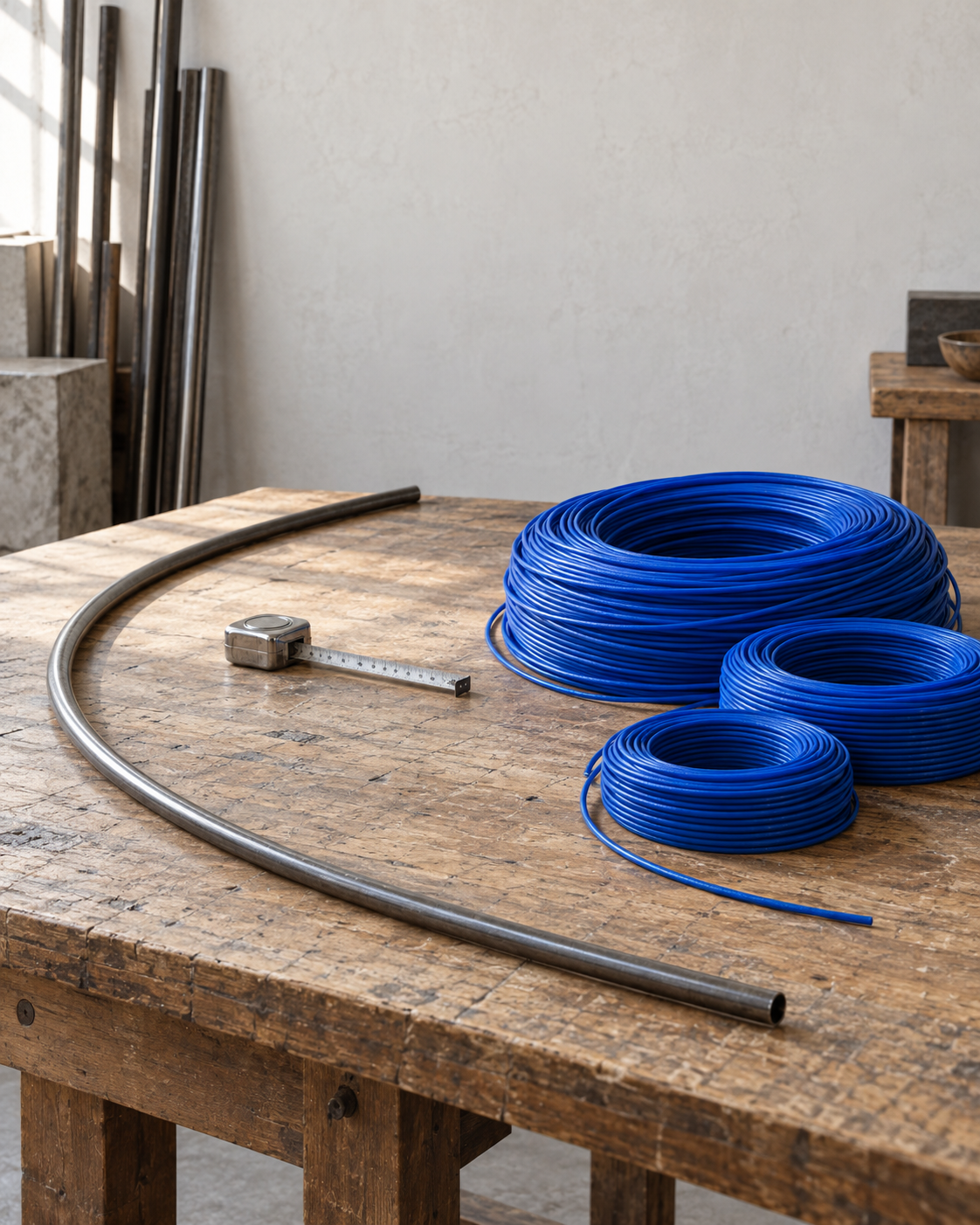
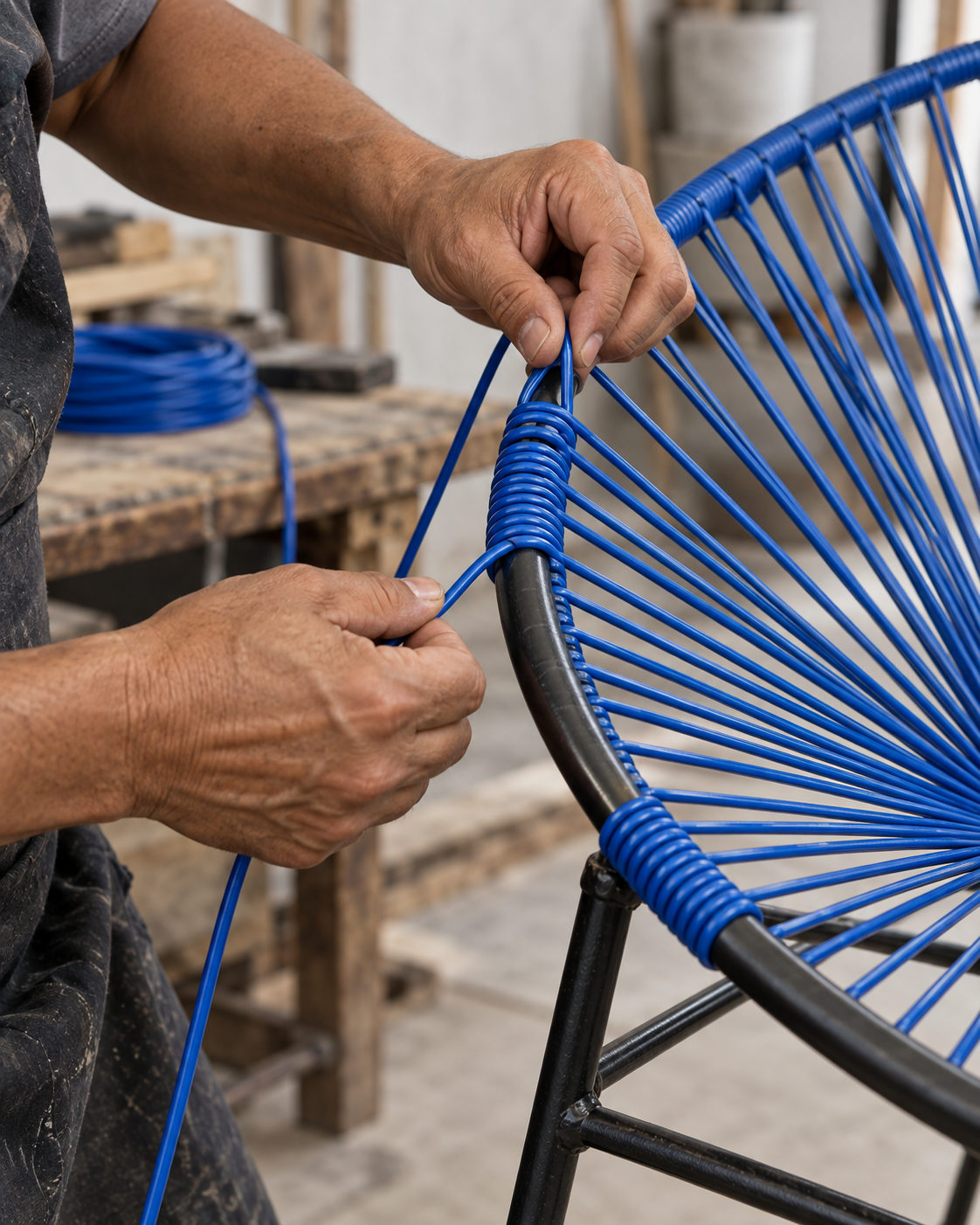
The Acapulco chair was born in Mexico in the mid-twentieth century, in a port where tropical heat made any upholstered chair uncomfortable. Its exact authorship was lost — it carries no copyright and no official manufacturer, which is why so many versions exist — but every account agrees on the problem it solved: letting the air through.
The most cited origin story connects the chair to a much older technique: the open weaving of Mayan hammocks, adapted by artisans on the coast of Guerrero. Another local, less romantic and perhaps more precise explanation ties it to the huaculete — the steel-rod hoop that coastal bakers carried on their shoulders, strung with henequen cord to hold up to forty pieces of bread. The structural principle is the same: a rigid hoop holding a network of tension.
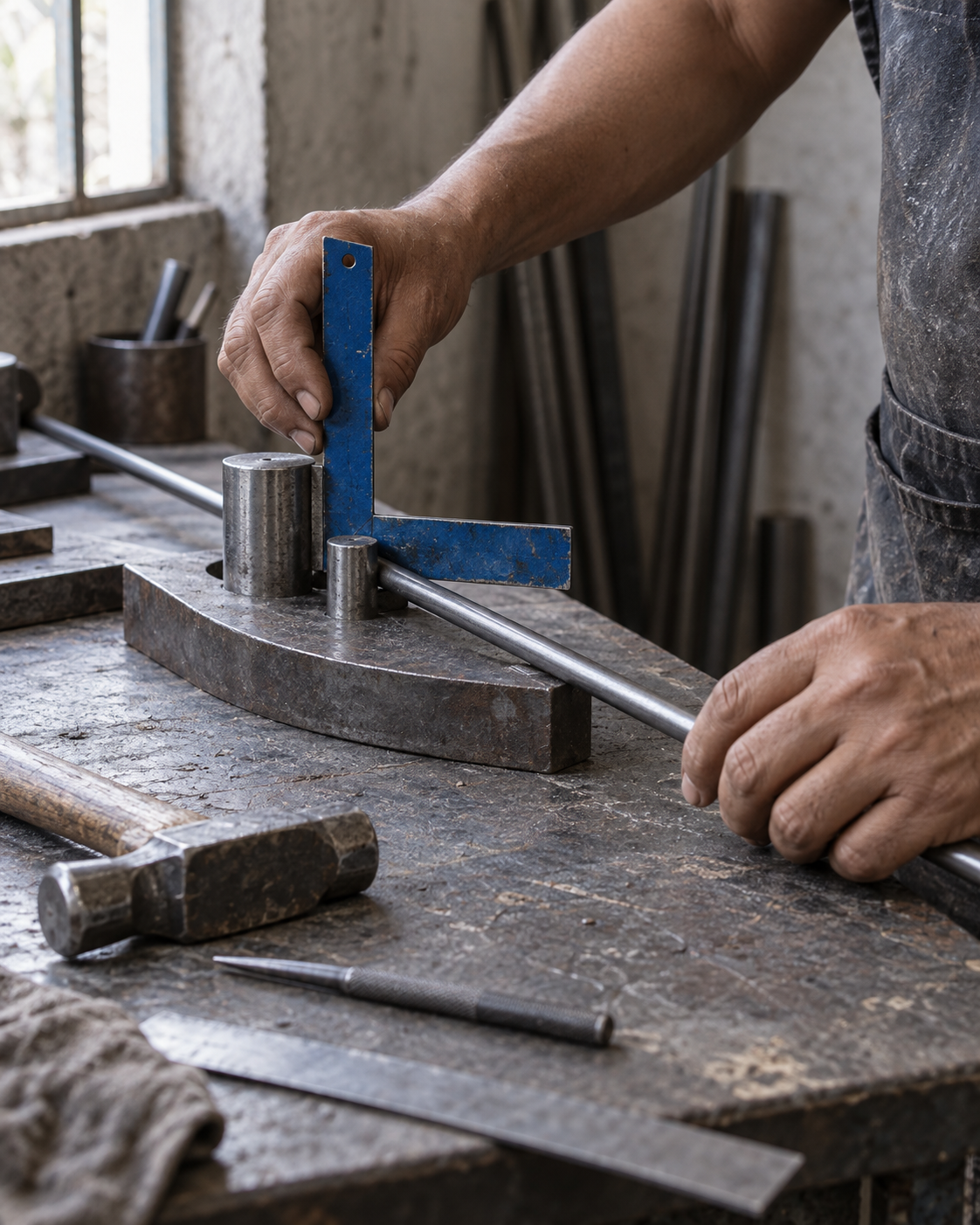
The finished object has only two material families — a bent and welded steel-rod frame, and a hand-woven cord, almost always PVC today rather than the original plant fiber. That simplicity of materials is deceptive: it says little about how much human labor sits between the rod and the chair ready to be sat in.
The steel arrives as a generic input, interchangeable between suppliers. The weave does not. That is where the chair stops being an industrial object and becomes a craft object — and where its value chain begins to look less like a factory and more like a workshop.
Figure 3.2
The same four principles order a chair factory and a credit platform. Only the material flowing between stations changes.
01
Produce to real demand, not to forecast.
02
Shrink the batch and the wait between stations.
03
Set the pace to customer consumption, not to peak capacity.
04
Adjust continuously with what the line itself reveals.

Hand-weaving an Acapulco chair takes hours, not minutes, and the result depends on the tension the weaver applies — too loose and the chair sags, too tight and the cord snaps under use. That skill is not written on a drawing; it lives in the body of someone who has practiced it hundreds of times, almost always in the same region where the technique passed from one generation to the next.
This creates a constraint that material selection alone doesn’t explain: moving the weaving to a different region — chasing cheaper labor — doesn’t reduce cost linearly, because the accumulated craft is lost along with it. A factory can relocate the forming and painting of the steel almost frictionlessly; it cannot relocate the weaving without first training new weavers, which takes time and produces defects while the learning curve climbs.
A digital system’s architecture has its own equivalent: there are generic components, interchangeable between cloud providers or teams, and there is a domain core — a bank’s risk model, a platform’s recommendation algorithm — that concentrates the organization’s accumulated knowledge, and that outsourcing cheaply destroys more value than it saves.
Identifying which station of the line is interchangeable and which is the irreplaceable craft is, in both cases, an architecture decision before it is a cost decision.

A finished chair doesn’t cross a border on its own: it crosses as a tariff code. A seat with a metal frame and no upholstery — the woven cord doesn’t count as upholstery for customs purposes — is classified under Harmonized System subheading 9401.79, the same category in more than two hundred countries, though each national customs authority appends its own digits for the specific duty rate.
That classification is not a minor formality. It determines the duty the importer pays, the certificates of origin the shipment must carry, and whether the product qualifies for preferential treatment under a treaty such as the USMCA. By 2026, roughly 85% of Mexican exports that meet the treaty’s rules of origin still enter the United States duty-free; the rest — and in particular certain products with metal content under Section 232 tariffs — can face surcharges that apply regardless of whether the product qualifies under the USMCA.
Seen through the lens of a production line, a customs checkpoint is exactly what Ohno would call waiting and inventory: a shipment held while its classification is verified is finished work generating no value until it crosses. Classifying correctly from the product’s design — not as an afterthought — is how an organization avoids building that waste into its own chain.
Table 3.1 — What decides a seat’s tariff classification
| Classified element | What it decides |
|---|---|
| Frame material | Metal vs. wood vs. wicker — each has its own subheading within heading 9401 |
| Presence of upholstery | A tensioned woven cord is not upholstery; a padded cushion is, and it shifts the subheading |
| USMCA rule of origin | Whether regional content qualifies for zero duty in the US and Canada |
| Section 232 tariffs | Metal surcharges that apply regardless of USMCA qualification |
A production line doesn’t sell speed. It sells the certainty that the next step will always be ready.— On the value of flow
The value of a well-designed line — the chair’s or any other product’s — isn’t measured in how many units it produces per hour on its best day. It’s measured in how often, on an ordinary day, the next station finds what it needs already there, without waiting, without defects to repair, and without inventory piling up to hide the problem.
That same certainty is what a customer asks of a bank loan, even though they almost never put it in those words. They don’t ask for absolute speed; they ask that the application not stall halfway, that the document they uploaded not get lost, that approval not depend on someone remembering to check a folder.
Transposing the Acapulco chair’s line to a mobile credit product isn’t forcing a metaphor. It’s recognizing that both systems solve the same problem — turning an intention into a reliable outcome, repeatedly — with different materials: rod and cord in one case, data, documents and risk decisions in the other.
What follows examines that second line, station by station, inside a bank whose technology landscape was built long before a phone existed that could approve a loan.

Consider a traditional bank with a landscape built in successive layers over decades: a banking core designed for overnight batch operations, a mature branch channel, and, more recently, a mobile layer the business wants to use to originate credit directly from a customer’s phone.
Just as the Acapulco chair couldn’t simply move its hand weaving into an automated factory without losing what made it valuable, the bank can’t simply build a pretty app on top of a core that was never designed to respond in seconds. Introducing a mobile credit product forces the APIfication of services that previously existed only as internal batch transactions — bureau lookups, identity validation, line calculation, disbursement — and exposing them as services the mobile channel can call in real time.
That APIfication is, in production-line terms, building a new forming-and-paint station: it doesn’t change the core’s raw material, but it does change the pace at which the rest of the line can consume what the core produces. Without it, the mobile app ends up waiting — the same waiting Ohno catalogued as waste.
Figure 3.3

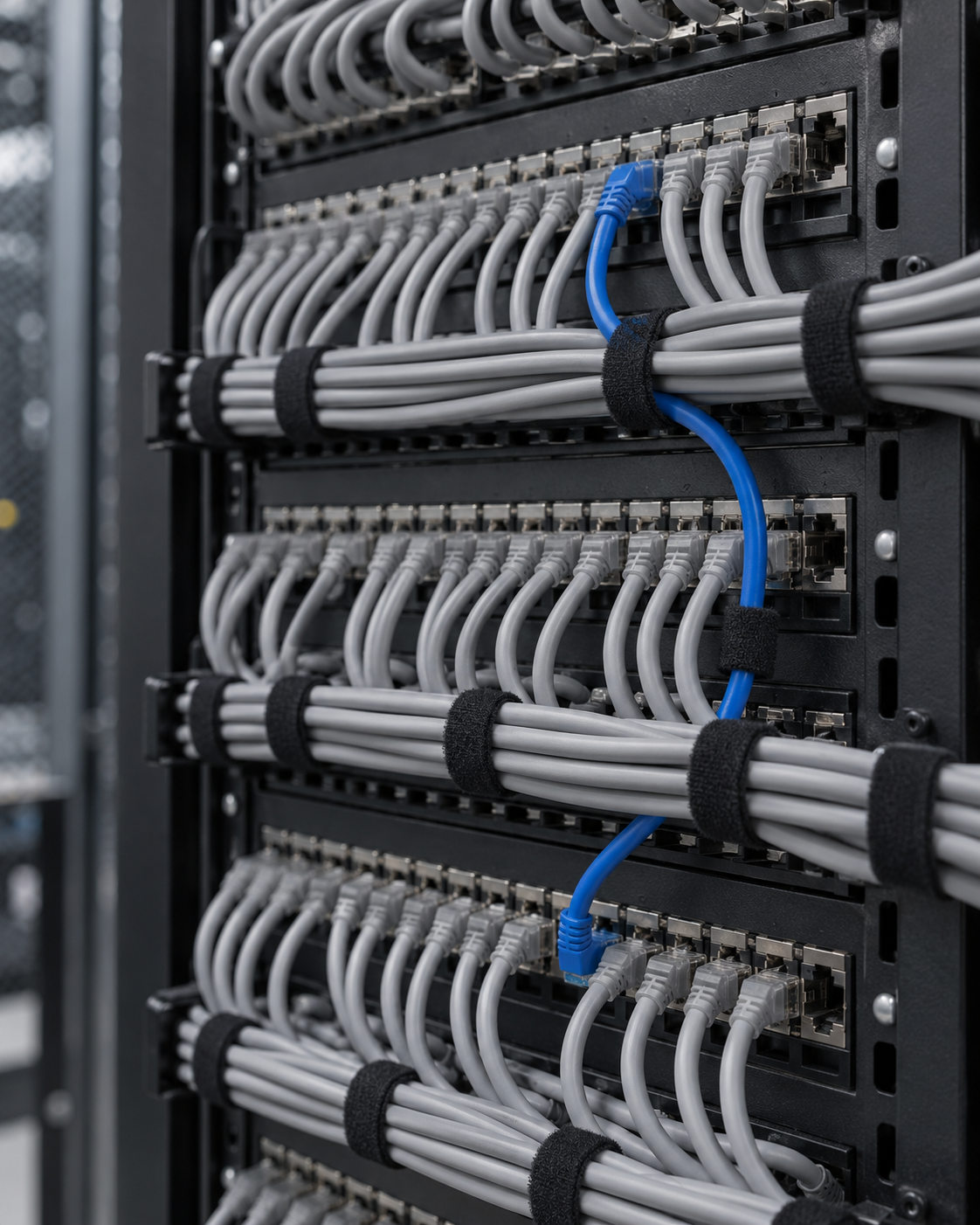
The API layer in Figure 3.3 is not one station but a small factory of its own. Behind it sit discrete modules — identity and biometrics, credit-bureau lookup, risk scoring, document management, disbursement — each owned by a different team, each with its own release calendar, and none of them built to know that a phone would one day call it directly. Treating that layer as a single box hides exactly the coordination problem a line manager cannot afford to hide.
What connects those modules to the mobile device model — and to the branch, and eventually to other institutions the loan touches, such as a credit bureau or a government registry — is an orchestration landscape: an API gateway that authenticates and routes each call, an integration or event layer that sequences steps that can’t run in parallel, and a service registry that lets a new module join the line without every other station having to be rebuilt. This is the conveyor belt of an enterprise line; without it, apification is just a set of doors that don’t open onto the same hallway.
Security in this landscape is not a station at the end of the line — it is built into every station, the way jidoka builds quality checks into the machine itself rather than inspecting the finished chair afterward. Mutual TLS and token-based authentication between the app and the gateway, field-level tokenization of the data OCR just captured, rate limiting and anomaly detection against the fraud that a fast digital channel invites, and a zero-trust posture between internal modules — none of these are optional additions; each is a stop-the-line mechanism that catches a defect before it reaches the customer or the regulator.
A traditional landscape usually built its modules to trust the network they sat on, not the caller on the other end of it — a good enough assumption inside a data center, a dangerous one once a customer’s own phone is the caller. Redesigning that trust boundary, not just adding a mobile screen, is what actually turns a legacy core into a line capable of producing a loan in minutes instead of days.

In the chair, steel rod enters the line with a known tolerance and a measurable yield: a certain percentage of the material bought becomes usable product after cutting. In the mobile credit product, the equivalent is the optical character recognition (OCR) engine that processes an official ID, a proof of address, and a bank statement that the customer photographs on their own phone, almost never under ideal light or framing.
That station’s yield behaves exactly like the material yield from the previous chapter: if the OCR engine accepts a document on the first pass only some of the time, the rest requires a retry or manual review — far more expensive per unit than the automated call.
An illustrative scenario makes it explicit: ten thousand applications, three documents each, thirty thousand documents in total. With an engine that accepts 78% on the first pass at $0.15 per call, 60% of the failures recover on a retry and the rest require manual review at $1.80 each — total cost reaches $10,242, or $0.34 per document processed.
Improving only the first-pass acceptance rate to 90%, at the same price per call, cuts total cost to $7,110 — thirty percent less — because every point of yield gained on the first pass avoids a cascade of retries and manual review downstream, exactly as a better cutting pattern avoids material waste.
Table 3.2 — The same document batch, two acceptance rates
| Variable | Base scenario (78%) | Improved scenario (90%) |
|---|---|---|
| Total documents | 30,000 | 30,000 |
| Accepted on first pass | 23,400 | 27,000 |
| Require manual review | 2,640 | 1,200 |
| Total cost | $10,242 | $7,110 |
| Cost per document | $0.34 | $0.24 |
Figure 3.4

Just as the chair doesn’t cross a border without correct tariff classification, a loan doesn’t disburse without crossing its own regulatory customs. Since July 2026, the CNBV has required that customer identification under the rules governing Article 115 validate biometrics — fingerprint and now also face — against INE, SRE or tax-authority databases, with a minimum match of 90% and a 90-business-day deadline for institutions to comply with the new Annex 71.
The documents OCR captured must be preserved with evidentiary value under NOM-151, which requires that digitization preserve the original document’s integrity and, where applicable, a conservation certificate issued by an accredited certification service provider. And the loan contract itself, before it can be offered to the public, must be registered in the RECA that CONDUSEF administers — the public registry of adhesion contracts that keeps a financial institution from selling terms different from what it declared.
On top of this sits the Federal Law on the Protection of Personal Data Held by Private Parties, in force since March 2025, which governs how every biometric datum and every identity document the app collected is handled — from the privacy notice to the transfer rules if any external provider takes part in processing.
None of these four crossings is optional, and as with any customs checkpoint, skipping one doesn’t speed up the shipment — it stops it cold when the regulator reviews it later.

A chair manufacturer that exports needs to know what happens when a piece arrives damaged or a weave loosens with use — a warranty and spare-parts network, even a minimal one, is part of the product, not an afterthought. A mobile credit product needs exactly the same thinking applied to its own failure modes.
When OCR fails to read an ID after two attempts, when biometrics fall short of the required 90% match, or when a customer simply stalls halfway through a long form, someone has to resolve it — and that someone can’t only be the same app that already failed that customer once.
A reasonable support model for this product operates in tiers: in-app self-service for the most common cases (retrying a photo, updating a field), a call center for what needs human verification but not physical presence, and the branch as the final tier for what requires in-person identification or resolving an exception the system didn’t anticipate.
Designing these tiers before launch — not discovering them through complaints — is what separates an operable product from one that only looks good in the demo.

Even though the product was designed mobile-first, some share of applications always ends up at a branch — by customer preference, by an exception the mobile flow couldn’t resolve, or because closing the sale still requires a signature the bank prefers in person. The branch is, in the production line, the last station before the product goes out the door.
Little’s Law gives precise language for what happens there: an application’s wait time equals the number of applications in progress divided by the rate at which the branch closes them. If there are 120 open applications at a given moment and the operation closes 40 a day, the average wait time is three days — not because any single application is slow, but because the system carries more work in progress than its closing rate can absorb.
This is exactly what Ohno called inventory disguised as work in progress: adding more tellers doesn’t fix the problem if the real cause is that too many applications enter at once with no limit. The fix, in a branch as in an assembly line, isn’t to move faster — it’s to limit how much work is allowed to be open at once.

One implementation team found its worst waste not in the API layer but on the road. Its borrowers were small-business owners working out of offices far from reliable connectivity, and the credit officer assigned to close each file had to travel there in person, collect paper signatures, drive back to a branch with signal, upload what could be uploaded, and return — sometimes more than once — whenever a form was incomplete or a signature had been placed in the wrong box.
Read against Ohno’s categories, that round trip was rarely one waste; it was three at once. Transport, in every drive between office and branch that moved no product closer to done. Waiting, in every file sitting on a desk for the next connectivity window. And motion, in the officer’s own repeated visits to fix what a single well-designed visit should have captured the first time.
The fix the team designed didn’t wait for perfect connectivity — it assumed its absence. The onboarding flow was rebuilt to run online and offline: data, documents and a facsimile signature captured on the mobile device itself, queued locally when there was no signal, and synchronized the moment the officer’s phone found one, complemented by a video-signature step that gave the file the same evidentiary weight a wet signature used to carry.
The line’s own instruments make the result legible: collecting a borrower’s complete data set dropped from thirty days to about a week, and the time to open an account was cut roughly in half — not because the officer drove faster, but because the process stopped depending on the drive at all.
Table 3.3 — Paper onboarding versus the online/offline hybrid
| Variable | Paper onboarding | Online/offline hybrid |
|---|---|---|
| Borrower data collection | ~30 days | ~1 week |
| Account-opening time | Baseline | ~50% shorter |
| Signature capture | Wet signature, office visit | Facsimile + video-signature, on device |
| Dominant waste removed | — | Transport, waiting, motion |

The Acapulco chair and the mobile loan seem to belong to different worlds — one turns steel and cord into an object you can touch, the other turns documents, biometrics and regulatory rules into a risk decision. Both, however, depend on the same discipline: a sequence of stations where each produces only what the next can consume, and where a defect is stopped at its source instead of traveling downstream.
A product’s architecture — physical or digital — is not the diagram drawn once at the start of the project. It is the production line the organization will operate every day after launch, with its generic materials, its irreplaceable craft, its customs checkpoints and its final point of sale.
Seeing that line clearly — not just the finished product that comes out of it — is what separates a team that can scale from one that can only launch.